RWE and KKR Secure £12.8 Billion Financing for Two UK Offshore Wind Farms
Climate Science Mark Segal 529 reads
Vanguard West and East will add 2.8 GW of offshore wind capacity, with construction planned from 2027 and commissioning expected in 2030.
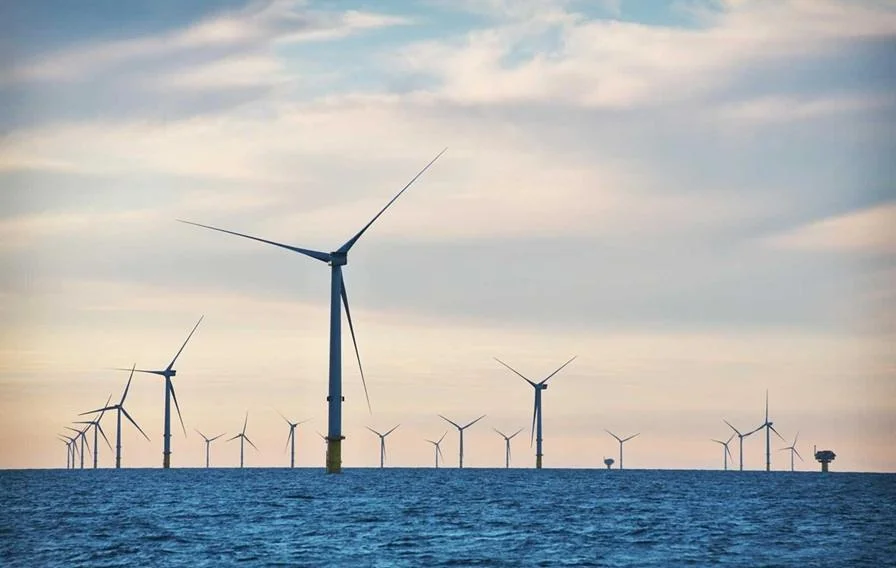
Two planned wind farms in the British North Sea have reached a major financing milestone: RWE and KKR say they have secured £12.8 billion in financing for Vanguard West and Vanguard East. Together, the projects are designed to deliver around 2.8 gigawatts of generating capacity, making this the largest project financing for UK offshore wind to date.
The scale matters because offshore wind development depends on more than turbines. Projects also need the infrastructure that connects them to shore, and substantial funding before they can begin construction. The companies estimate total investment in the farms and their associated transmission infrastructure at around £12 billion. Their financing package combines £11.1 billion in cash facilities with £1.7 billion in ancillary facilities, alongside equity commitments from RWE and KKR.
Two projects off Norfolk
Vanguard West and Vanguard East will be built between 50 and 80 kilometres off the Norfolk coast in East Anglia. Each is planned to have an installed capacity of 1.4 GW. The companies say the combined output could meet the energy needs of around three million homes.
That household comparison gives a sense of scale, but installed capacity does not mean the farms will produce electricity at that level continuously. Wind generation varies with weather, and the projects’ contribution to the power system will depend on the electricity they generate over time and how effectively that power can be carried to shore. The planned transmission infrastructure is therefore part of the investment, not an add-on to the wind turbines.
RWE says preparatory work onshore is already well advanced. Offshore construction is due to start in early 2027, with both projects expected to be fully commissioned in 2030. Those milestones set out the current schedule; delivery will require the wind farms and their connections to progress together through construction.
RWE and KKR form an equal joint venture
The financing accompanies the completion of a transaction that gives RWE and KKR equal ownership of the projects. The companies have formally established a 50:50 joint venture to develop, build and operate both wind farms. RWE will lead project delivery for the joint venture.
RWE secured the project contracts in early 2026, and KKR agreed at that time to acquire half of the projects. The completed transaction now sets the ownership structure for the work ahead. An equal partnership gives both companies a direct stake in the projects, while RWE takes responsibility for leading delivery.
RWE chief executive Markus Krebber described the partnership as a foundation for delivering the two projects and pointed to the scale of lender support. For KKR, infrastructure co-head Vincent Policard said the investment is intended to support the projects through construction and operation. Together, their comments underline the long time horizon involved: financing has to support development and construction before the wind farms begin producing electricity.
What the financing enables
The backing comes from a consortium of 35 international banks. That group support and the companies’ equity commitments form the financial base for projects whose costs include both offshore generation and transmission connections. The £12.8 billion financing package and the estimated £12 billion total project investment are separate figures reported by the companies: the financing includes cash and ancillary facilities, while the total investment estimate covers construction of the wind farms and associated infrastructure.
Large offshore projects can bring substantial new generating capacity, but their practical contribution rests on completing several linked pieces of work. Turbines must be installed at sea, onshore preparations must be ready, and the transmission system must connect the generation to the wider electricity network. The companies’ schedule points to offshore work beginning in 2027 and full commissioning in 2030; progress on those steps will show how quickly the planned capacity can become operational.
For the UK wind sector, the financing sets a new benchmark for project scale. For the power system, the more meaningful measure will be the electricity Vanguard West and East deliver once they are operating. The next milestones are the start of offshore construction and completion of the infrastructure needed to bring their power ashore.