COP31 Day Two: Fossil Exit Roadmap, Electrification Push and a Finance Squeeze
Climate Science Climate & Capital Team 633 reads
COP31 day two in Antalya: a voluntary fossil transition roadmap gains backers, a 35x35 electrification pledge takes shape, and emissions dip slightly.
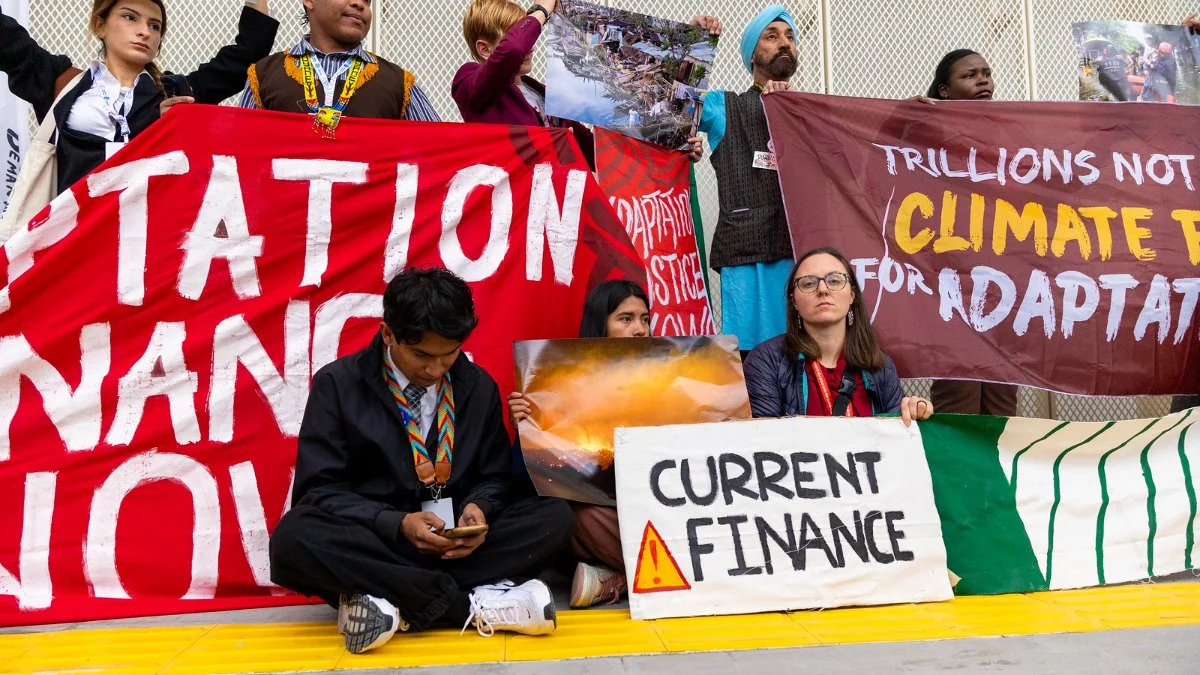
Day two of COP31 in Antalya showed how much of the action sits outside the formal negotiations. Two voluntary initiatives took centre stage, and a new set of numbers raised pointed questions about who is paying for the transition. Greta Thunberg, attending her first COP since Glasgow in 2021, used her arrival to call the talks hypocritical. "It's a hypocrisy every year that the host countries are given an opportunity to whitewash themselves," she said, Al Jazeera reports, arguing that lobbyists paid by destructive industries shape the process.
Logistics added their own friction. Climate Home reports that traffic jams and packed buses and trams forced early energy and transport events to be rescheduled. The conference has more than 68,500 registered participants and another 24,500 workers, and the venue sits about 25 kilometres from central Antalya.
A roadmap away from fossil fuels gains unexpected backers
Brazil's COP30 president, André Corrêa do Lago, presented a global roadmap for transitioning away from fossil fuels to a packed plenary. What stood out was the support. India, Nigeria and Germany, all significant fossil fuel producers, moved behind it. Nigeria, an OPEC member, described the roadmap's recognition that countries start from different places as "fundamental." Germany and the Netherlands want national roadmaps to feed into the next global review of climate progress in 2028, and the UN chief said all countries should be making progress on cutting fossil fuels by then, according to Climate Home.
Here's the thing: the roadmap is voluntary, sits outside the official negotiations, and moves no money. Its value depends on what follows. If these countries translate it into financed national plans before 2028, they produce something useful: country-by-country timelines for when coal, oil and gas demand is expected to fall, and a clearer picture of which assets face early retirement. Until then, it's a signal of intent rather than a mechanism.
Electrification pledge runs into the clean-power question
The presidency is also pushing a "35×35" pledge to raise electricity's share of the world's final energy use from about 20% today to 35% by 2035. More than 180 companies, with combined annual revenue of $1.69 trillion, including H&M, Ikea, Danone, Uber, Schneider Electric and Volvo Cars, have asked governments to make clean electrification "a central pillar of economic and industrial strategy," according to ESG Dive. A We Mean Business Coalition survey found 69% of business leaders say their companies are electrifying faster than governments are preparing for.
The catch is in the word "clean." The pledge doesn't require the additional electricity to come from low-carbon sources. Coal generated about a third of Türkiye's power last year and over 40% of Australia's, as Reuters reports. Portugal says it will push to close that gap. "Our proposal is not simply electrification, but clean electrification," said its environment minister, Maria da Graça Carvalho. That distinction will decide whether electrification cuts emissions or simply moves them onto the grid. For a closer look at the critics and the pledge's design, Reuters' pledge coverage is worth reading in full, and Hürriyet Daily News has the IEA's support for the push.
A small emissions dip, mostly from a price shock
The Global Carbon Budget, released Tuesday, projects global fossil CO2 emissions will fall 0.4% in 2026, to 38.2 billion tonnes. The world has roughly 150 billion tonnes of CO2 left to emit if it wants to hold warming to 1.5°C, which is less than four years at today's rate. The breakdown is uneven. Oil emissions are down 1.9% as the oil price shock linked to the Iran war cut demand, and gas is down 0.3%. Coal is still up 0.6%. China (-0.9%), the US (-1.3%) and the EU (-1.5%) all declined, while India rose 4.4%.
That's a welcome number, but it isn't a trend yet. "A drop in emissions in one year is not a peak unless it is driven by structural change," said Glen Peters, one of the report's authors. The useful question is whether the demand lost to high oil prices returns when prices ease, or whether electric vehicles, heat pumps and renewables have replaced it for good. The Global Carbon Budget's summary has the country and fuel detail.
Loan repayments threaten to reverse the finance flow
Much of rich countries' and development banks' climate finance arrives as loans, and the repayments are rising fast. Repayments on public climate loans, including interest and fees, nearly tripled from $6.9 billion in 2020 to $20.1 billion in 2024. That's about a fifth of the public climate finance developed countries reported providing that year. A CARE analysis of about 17,500 loan records, shared with Climate Home, suggests developing countries could be paying back more each year than they receive in new climate loans by the mid-2030s.
Headline finance totals count loans at face value, which hides this dynamic. If repayments overtake new lending, the net flow reverses, moving money from poor countries to rich ones. That would sit awkwardly beside the $1.3 trillion goal agreed last year. Friday's finance and trade day is where this will get its closest scrutiny.
China's position may decide the pace
"The only country that has hugely accelerated is China. The rest of the world is stumbling along," former US secretary of state John Kerry told the Guardian. The numbers back him up. China's clean-tech exports passed $220 billion last year, and the country holds about 85% of solar and 80% of lithium-ion battery manufacturing capacity. Its latest five-year plan pledges, for the first time, to "actively participate in and lead global climate governance."
China wants the talks to address the "free flow" of green technology, which puts it directly at odds with US and EU tariffs on Chinese EVs and solar. How Beijing handles that tension in Antalya will shape the cost of the transition for everyone else. The Guardian's Fiona Harvey covers the leadership question in depth, including Kerry's argument that markets have already settled it.
Next up is the World Leaders Climate Action Summit, which opens Wednesday. The useful test is whether the roadmap, the electrification pledge and the finance debate turn into commitments with dates and dollar figures attached.