Agtech Funding and Deals Span Crop Science, Food Production and Farm Technology
Climate Science Jennifer Marston 721 reads
Recent deals back seed treatments, soil sensing, fermentation and food access, while partnerships aim to bring new tools closer to farms and food makers.
Agtech investment and dealmaking are spreading across several parts of the food system: crop inputs, farm data, fermentation, food manufacturing and access to food. The announcements offer a snapshot of where companies and funders are placing resources, though the brief details available vary widely. In most cases, the amounts and stated aims are clear; timelines for commercial results and the scale of deployment are not.

Crop inputs and farm technology draw capital
India-based chemicals platform Scimplify raised $25 million in a strategic round led by Hitachi Ventures. BioConsortia secured another $15 million in venture capital to commercialize seed treatments. The two deals point to continued interest in products and services tied to agricultural chemistry and crop establishment. Funding can support development and commercialization, but the announcements provide no detail on product performance, customer numbers or how quickly either business expects to expand sales.
Other raises target specific crop and soil challenges. Canadian company Molagri raised $5.8 million to develop what it describes as “updatable” biopesticides. The term signals a product concept that can be adjusted over time, but the available details do not explain the mechanism or how updates would work in practice. Swedish firm OlsAro raised $5.5 million as its salt-tolerant wheat approaches the market. Salt tolerance could matter in growing areas where soil salinity constrains crops, but commercial value will depend on how the variety performs under local conditions and fits farmers’ existing production systems.
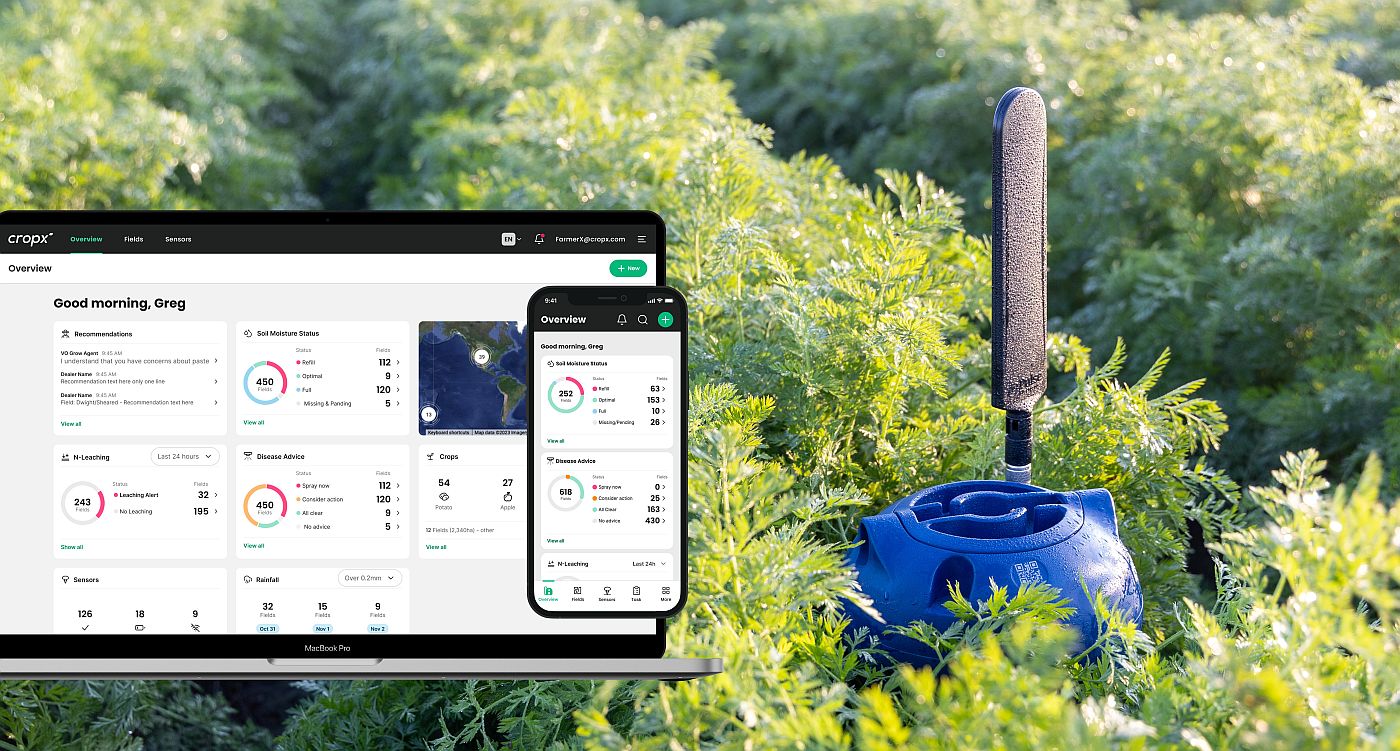
Stenon, a soil-sensing startup, received backing from Yara Growth Ventures. The announcement’s headline connects the investment with fertilizer price pressures, but gives no funding amount or product deployment figures. Soil sensing is intended to help users understand field conditions and make input decisions with more information. Its practical benefit will depend on the quality and timeliness of the readings, and on whether farmers can translate them into decisions that improve crop production or input efficiency.
CropX is set to provide soil-sensing technology to the Lincoln University McCain Foods NextGen Regenerative Farm. That makes the farm a setting for applying digital tools within a regenerative agriculture project. The details provided do not specify the farm’s size, the measurements CropX will collect or the outcomes it will track. Those measures will matter for judging whether the technology can inform farm practice beyond a single site.
Partnerships aim to put tools into use
Several arrangements pair technology developers with established agricultural or food businesses. PerPlant reached a deal with Valtra to install its AI crop sensor on tractors at the factory. Factory integration could make a sensor available as part of the equipment purchase, though the announcement doesn’t say which tractor models are involved, how many units are expected or what the sensor measures.
Switch Bio and Bayer are working together on technology for “switchable” biofertilizers. No further description of the system is available here, so its operating method and intended crops remain unclear. In a separate collaboration, CREMER’s FermBase and Differential Bio are deepening an AI partnership after fermentation trials described as successful. The announcement identifies the trials as a milestone, but supplies no results or production data to assess what was achieved.
Other deals focus on production capacity and market reach. Dutch greenhouse-control company Source acquired Optimal, whose work centers on autonomous greenhouse control. Mycofeast acquired New Zealand company Daisy Lab to expand its precision-fermented dairy capabilities. The arrangements bring together complementary capabilities, but the details supplied do not specify the technologies being combined, new production volumes or expected customer availability.
Syngenta and Japan’s Kyoyu Agri partnered to bring the herbicide cyclopyranil to Asian rice markets. This is a crop protection deal tied to a defined region and crop. The announcement provides no information here on launch timing, target countries or how the product will fit within local rice-growing practices. That context will shape how farmers assess its usefulness alongside their existing weed-control options.
Food production and access also feature
BloomX closed a $13 million Series A, while MiAlgae secured £2.5 million. The brief gives no additional detail on BloomX’s use of funds. For MiAlgae, a plan to more than double its workforce by 2028 gives one indication of intended expansion, although the current headcount and roles involved are not stated. Cambridge-based Neela Biotech raised £2.1 million for AI-driven sustainable fuel technology, adding a fuel application to a set of deals otherwise centered largely on farming and food.
Foodics invested in Funding Souq to expand restaurant financing in Saudi Arabia and the United Arab Emirates. This connects a restaurant technology business with financing services, but the announcement does not state the investment size or explain the financing terms. LIVEKINDLY Collective completed its acquisition of Dutch private-label manufacturer Dalco Food, a move that brings food production capacity into the group. The available details do not quantify that capacity or describe changes to the product range.
Food access is another part of the mix. Deere committed $18.5 million to support the food system across the United States. The announcement’s headline describes the commitment’s broad purpose, but does not break down its recipients or how the funding will be allocated. For communities, the practical effect depends on which food access activities receive support and how they reach people.
What to watch
The funding totals show that investors and companies are backing a wide range of approaches, from crop genetics and biological inputs to sensing, food manufacturing and fermentation. But a funding round, partnership or acquisition is an early signal, not evidence of impact at scale. The next useful indicators will be product availability, adoption by farms and food businesses, measurable performance, and clear details about how the deals translate into production or access.
For agricultural technology, the central test is whether a tool works reliably under the conditions where it is meant to be used and fits into day-to-day operations. For food and fermentation businesses, capacity, customer uptake and consistent production will show whether new capabilities can move beyond development. These announcements establish areas of activity; results will determine how much they change the food system.