COP31 Faces a Climate Finance Test as Emissions Plans Fall Short
Climate Science Climate & Capital Team 519 reads
COP31 arrives with weaker emissions pledges, uncertain adaptation funding and a first loss-and-damage payment far below Nepal’s reported losses.
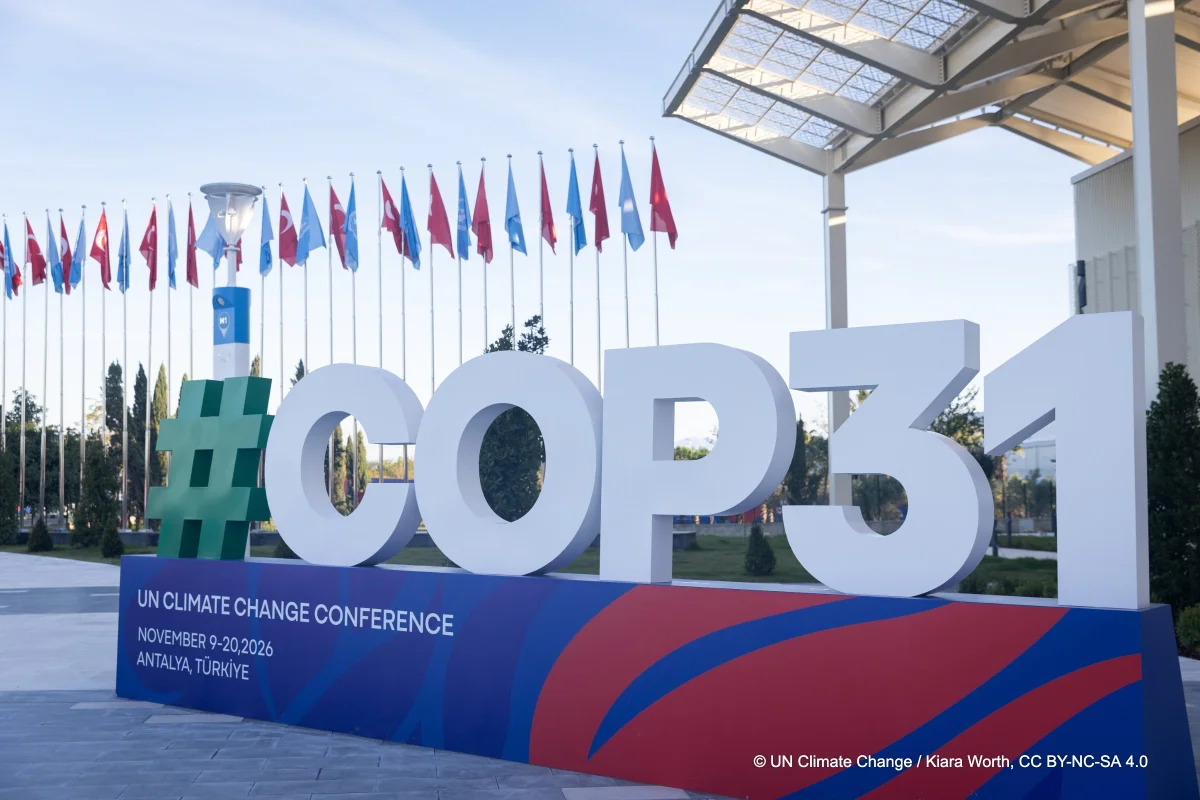
COP31 opens in Antalya, Türkiye, from November 9 to 20 with a stark gap between the scale of climate needs and the commitments on the table. Current national plans point to steep warming, the first payment from a fund for climate-related losses covers only a small share of Nepal’s reported damage, and the summit’s largest corporate sponsor earns much of its income from an oil refiner. The choices made in Antalya could shape how climate finance is directed over the coming decade.
The picture is not uniformly bleak: electric cars are gaining ground in China, and renewable capacity in South Korea has moved ahead of coal. But those shifts sit alongside weaker emissions pledges and unresolved questions over who pays for adaptation and climate damage. For businesses and communities, the negotiations matter because they can influence the flow of funds for cleaner energy, resilience and recovery.
Emissions pledges are losing ground
The UN Environment Programme’s Emissions Gap Report, published October 21, puts the world on course for 2.8°C of warming. If every country meets its current commitments, the estimate falls to 2.6°C. A week later, the UN climate secretariat’s assessment of plans from 154 countries found they would cut emissions by 6% below 2019 levels by 2035. That reduction could reach 9% if conditional pledges are fulfilled.
The previous tally projected a 12% reduction, though it covered fewer countries. The departure of the United States from the Paris Agreement accounts for much of the decline described in the source material. Country-level details underline how uneven the plans are: Climate Home News reports that India’s plan allows emissions to rise almost 64% above 2023 levels by 2035. Saudi Arabia has no 2035 target and instead sets a 2040 goal against a baseline it has not disclosed.
The Paris process depends on countries strengthening their commitments over time. When plans weaken, the expected pace of change becomes less certain for companies deciding whether to fund clean energy and related infrastructure. The figures also put more weight on investment decisions made outside the negotiations, while leaving questions about how quickly emissions can fall.
Fewer top-level attendees, fewer openings for finance
A provisional UN speakers list names 77 heads of state or government for the leaders’ summit on November 11 and 12, compared with 116 at COP28 in Dubai. Türkiye expects 91 leaders to attend. Among the G20 countries, the speakers list includes the UK, Brazil and China; China is expected to send a vice-premier.
These high-level sessions often provide a stage for major funding announcements. Lower attendance means fewer opportunities to secure new commitments when developing countries are seeking support. Former UN climate chief Yvo de Boer called the turnout “the wrong signal at a difficult time,” in comments reported by Climate Home. The same report notes that China’s Xi Jinping has not attended a COP since Paris in 2015.
An oil refiner’s parent company is the main sponsor
Koç Holding, Türkiye’s largest conglomerate, is COP31’s “Global Business Partner.” Around three-quarters of its income in the first half of 2026 came from its energy division, which is dominated by the oil refiner Tüpraş. The company’s position comes during an oil price surge that has increased refiners’ earnings.
The UN hosting agreement says a sponsor’s “climate integrity” should be considered, but the assessment of Koç has not been made public, and the amount it paid is also undisclosed. That lack of detail may matter to financial institutions that use summit commitments to inform lending for the transition. Climate Home’s reporting says Koç and Tüpraş cut their 2030 climate targets last year to levels they had nearly reached. Separately, a report by Urgewald, covered by Eco-Business, says both hosts, Türkiye and Australia, are continuing to expand coal.
Adaptation finance remains unsettled
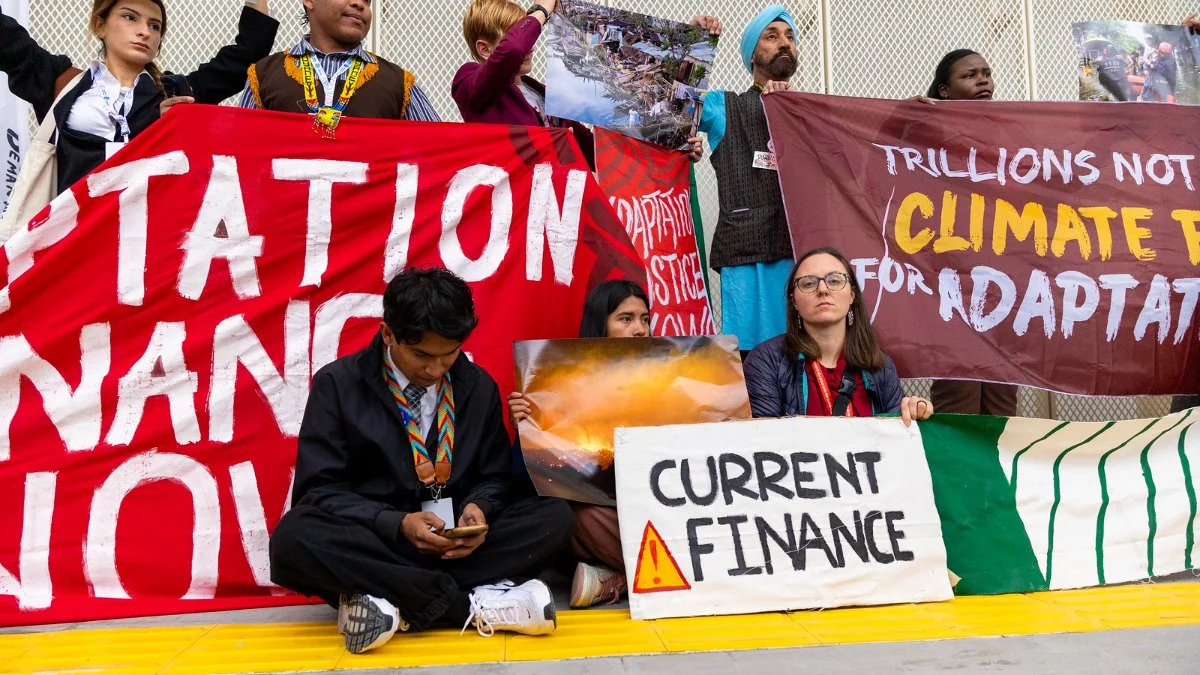
At last year’s meeting in Belém, countries agreed to “at least triple” finance for adapting to climate change by 2035. That support can pay for measures such as seawalls, drought-resistant crops and early-warning systems. Yet countries did not settle on the starting amount or who would provide the money. Ghana, chairing the African Group of Negotiators, has asked for adaptation finance to be added to the Antalya agenda.
Adaptation projects often do not generate a commercial return, leaving them dependent on public funding. If negotiators spend the opening days disputing whether the issue belongs on the agenda, they may have less time to work through practical financing arrangements. Climate Home reports that the EU, UK and Japan blocked a similar push in Bonn in June. A finance negotiator from the least-developed countries described adaptation funding as “a homeless issue” in the talks.
Nepal’s first payment shows the scale of the gap
A fund created to help developing countries address climate-related damage made its first allocation in October: $20 million for Nepal following August floods. Nepal’s losses were estimated at $2.69 billion, according to Inside Climate News. The payment is less than 1% of that sum.
The fund’s first allocation is a milestone after decades of demands for support with climate damage. Its size also makes the financing challenge concrete: recovery needs can far exceed the funds delivered. How the fund is replenished and scaled up will be a key measure of whether countries can turn commitments into meaningful support. At a board meeting, Germany and Czechia said the payment should set no “precedent.” Pakistan’s Ali Sheikh replied, “Please do not define the boundaries for learning,” according to Climate Home.
Trade and development finance shape the transition
China, the leading producer of solar panels, batteries and electric vehicles, wants COP31 to address the “free flow” of green technology. Vice-minister Li Gao has criticized what he calls “unilateralism and protectionism,” referring to EU carbon border taxes and Western tariffs on Chinese clean technology.
Trade costs can affect the price of the transition. If tariffs or other barriers make solar panels more expensive in Europe and the United States, clean-energy projects there may cost more too. Li Shuo of the Asia Society Policy Institute expects trade to be “one of the prominent issues in Antalya,” while suggesting Beijing may take a more measured approach than at last year’s meeting in Belém. Climate Home spoke with Li, and Carbon Brief consulted experts on China’s priorities.
The World Bank and International Monetary Fund gave climate less attention at their October meetings in Bangkok, under pressure from Washington, according to Green Central Banking. That matters because the plan agreed in Belém calls for $1.3 trillion a year in climate finance by 2035 and relies heavily on development banks. If those institutions step back, private finance would need to fill more of the gap, though private lenders generally seek a return—an obstacle for projects that protect communities without generating steady income.
Clean technology is advancing even as talks stall
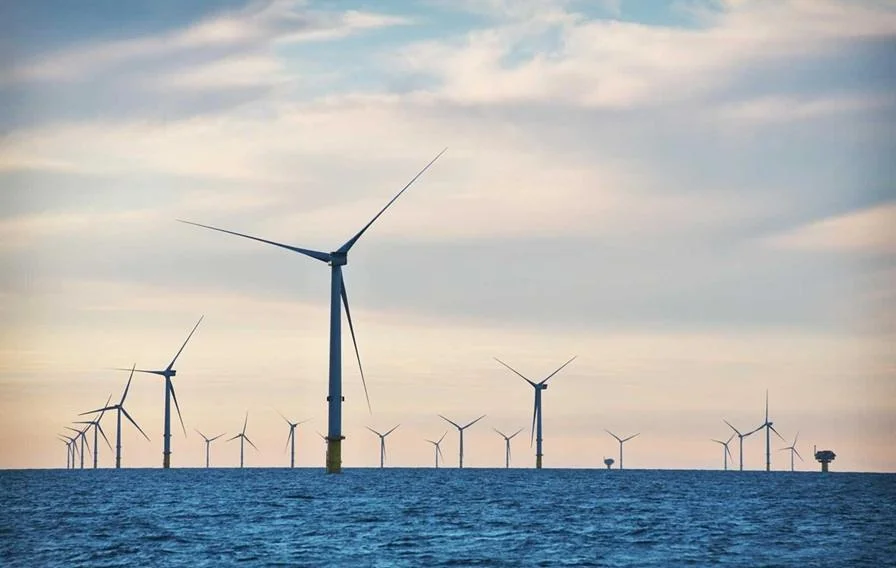
Two-thirds of new cars sold in China are now electric, according to Carbon Brief. South Korea’s renewable energy capacity has also overtaken coal capacity for the first time, reports pv magazine. These shifts show that deployment can continue while international talks struggle to produce stronger commitments.
COP31 runs at the Antalya Expo Center, with the World Leaders Climate Action Summit scheduled for November 11 and 12. Türkiye hosts the meeting, with environment minister Murat Kurum as COP President; under an arrangement reached at COP30, Australia’s climate minister Chris Bowen presides over negotiations. The central questions are whether countries can strengthen emissions plans, agree on adaptation funding and expand support for climate-related losses. Progress on those fronts will determine whether the summit’s financial promises reach communities and projects at the scale the figures demand.