Autumn Reading: Fifteen New Books on Nature, Climate and the Stories Behind the Science
Renewable Energy Colleen M. Crary, Ph.D. 307 reads
Fifteen new autumn titles, from kelp forests and shifting baselines to corporate climate doubt and the women who do the fieldwork.



Autumn reading lists usually lean toward fiction, but this batch of fifteen new titles has a clear environmental thread. Some books take on the science of warming oceans and changing rivers. Others follow the people who count animals, or examine how industries have shaped what the public believes about the planet. A few are written for children. Here's how they fit together, with the publishers' descriptions as the starting point.
Warming oceans and rivers under pressure
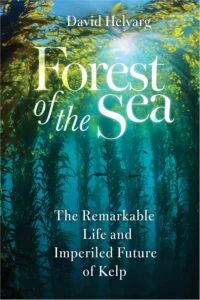
Forest of the Sea: The Remarkable Life and Imperiled Future of Kelp
By David Helvarg
Helvarg's subject is a cold-water habitat that took roughly 30 million years to form and is now losing ground as oceans warm. Kelp forests sit largely out of sight beneath the surface, yet they support sharks, otters, eels, sea stars, crabs, rockfish and many other species. They also sustain coastal communities that depend on the sea for their livelihoods.
The comparison with coral reefs is the sharpest part of the pitch. Reef decline plays out in tropical waters that tourists can see for themselves, while kelp forests grow along cold coastlines far from resort towns. That distance makes their decline easier to miss. The book's central question is what it would take to halt the loss before these forests give way to urchin barrens, bare seafloor with little left alive. For anyone tracking marine ecosystems, that's the question worth sitting with.
Spooky Rivers: 25 Strange and Mysterious Rivers That Snake Across Our Planet
By Geo Rutherford
Rutherford follows 25 rivers around the world, covering their natural oddities, scientific puzzles, historical episodes and the myths attached to them. Some rivers catch fire or boil. Others run so deep they seem bottomless, slip underground beneath towns, or vanish without a trace. The book also notes that many of these waterways are increasingly threatened by climate change.
The framing is playful, but the underlying point is serious. Rivers carve landscapes, sustain civilizations for thousands of years, and can be both lifeline and hazard for the same communities. Anyone working on water supply, flood planning or hydropower will recognize how much of that history still bears on present decisions.
Memory, baselines and the case for paying attention
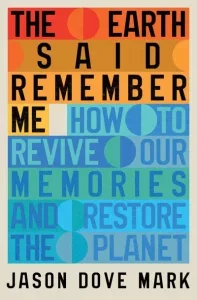 The Earth Said Remember Me: How to Revive Our Memories and Restore the Planet
By Jason Dove Mark
Mark presents this as a rallying cry and resistance manual from a figure he describes as one of the leaders reshaping the environmental movement. His starting observation is one many readers will recognize. As the climate emergency worsens and biodiversity declines, people gradually adjust. Few can clearly recall what summers felt like before relentless heat, or before wildfire became an annual routine.
Scientists have a name for this drift: shifting baseline syndrome. Each generation takes the conditions of its youth as normal, so the loss that came before goes unnoticed. The book argues that this quiet normalization is why people can slide toward trouble without a clear moment of alarm. In my read, that's the most useful frame in the whole list, because it explains why data alone often fails to move people.

Wildlife, fieldwork and the people doing it
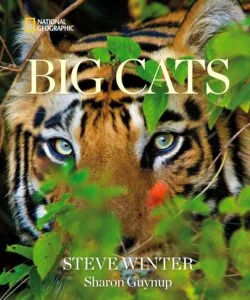
By Steve Winter and Sharon Guynup
National Geographic photographer Steve Winter has spent his career photographing big cats, from jaguars in Brazil's Pantanal to snow leopards in the Himalayas. Written with environmental journalist Sharon Guynup, the book moves through chapters on cougar, jaguar, leopard, snow leopard, tiger and lion. It also tracks how Winter's images have contributed to conservation efforts for these species, which is the detail that gives the photography more weight than its beauty alone.
The book is pitched beyond specialists, too. Anyone who loves cats, large or small, will find something here.

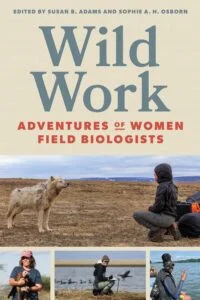
Wild Work: Adventures of Women Field Biologists
By Sophie A. H. Osborn and Susan B. Adams
This anthology gathers more than 40 first-person accounts from 37 women field biologists. Their work covers wolves, condors, bats, bears and many other animals, as well as the fish and wildlife research that underpins conservation decisions. Some stories are light: playing tag with wolves, or cuddling wild foxes. Others are harder, such as wading through rivers full of venomous snakes or dealing with poachers.
What stands out is the candor about logistics. The contributors describe balancing demanding fieldwork with family life, and the lasting friendships formed in remote places. The editors also point to a gap in the record: women have been central to wildlife research for decades, yet their stories have rarely made it into print. Here's the thing: anyone who relies on field datasets should know whose hands collected them.
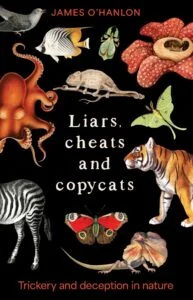
Liars, Cheats, and Copycats: Trickery and Deception in Nature
By James O'Hanlon
O'Hanlon catalogs animals and plants that rely on deception. A praying mantis resembles a harmless pink flower. An assassin bug strums spider webs to attract a meal. A cuttlefish changes color to hide its romantic intentions. The book explains the science of camouflage, mimicry and masquerade, and ranges from tropical rainforests to deep ocean trenches. It looks at how deception helps organisms avoid predators, lure prey and reproduce.
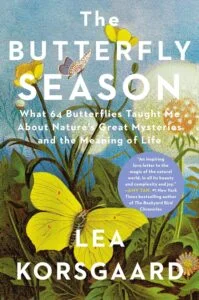
By Lea Korsgaard
Korsgaard set out to see all 64 butterfly species native to Denmark within a single year. The result blends nature writing, philosophy, myth and science, with 64 hand-drawn illustrations. It moves through meadows, marshes and ancient coastal land across the seasons. Part field diary and part reflection, it's the most personal title on the list, and a reminder that local biodiversity rewards close attention.
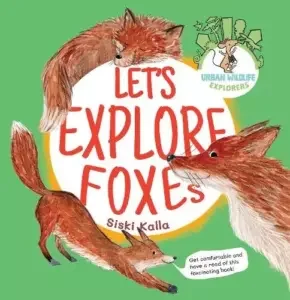
Let's Explore Foxes: An Urban Wildlife Explorers Book
By Siski Kalla
Part of the Urban Wildlife Explorer series, this children's book focuses on foxes, which are common in cities yet poorly understood. It mixes humor, science and watercolor illustrations. The series also offers practical advice on how kids can help protect local wildlife and interact with it safely, which makes it useful at home or in a classroom.
Industry, information and the cost of doubt
Brought to You By: How Corporations Warped the Truth, Conned the Public, and Broke Democracy
By Amy Westervelt
Westervelt, an investigative reporter and host of the Drilled podcast, traces a pattern across industries. Tobacco companies downplayed the health risks of cigarettes. Drugmakers buried studies that could hurt sales. Oil companies misled the public about the dangers of climate change. Her argument is that doubt and science denial have been built into a repeatable playbook.
The book describes an apparatus of think tanks, lobbyists, sponsored university labs and news outlets that, over roughly a century, has muddied the information environment. For climate communicators, this is the most directly relevant title on the list. It explains why a well-documented scientific finding can still feel contested to many audiences, and why the fight over facts is also a fight over institutions.

The Nerd Reich: Silicon Valley Fascism and the War on Democracy
By Gil Durán
Durán's book argues that a set of technology leaders has pursued a decades-long effort to shift power from elected institutions toward corporate control. He traces that thinking to The Sovereign Individual by James Dale Davidson and Lord William Rees-Mogg, and profiles figures he describes as the movement's prominent voices, including Peter Thiel, Marc Andreessen, Balaji Srinivasan and Elon Musk. The book connects this outlook to cryptocurrency, artificial intelligence and social media. Durán's framing is openly urgent, and readers will judge how persuasive his evidence is. The subject matters to energy and climate watchers because the same platforms and infrastructure increasingly shape how data-center growth and grid planning are debated.

Profiles in Cowardice: A Study of Collaboration in the Trump Era
By Jacob Weisberg
Weisberg examines how a small set of individuals, spanning Big Tech, Wall Street, large corporations and the national legislature, formed a network of influence during the Trump era. His central idea is that authoritarian pressure often works less by toppling institutions than by bending and pressuring them. The book is written with a sharp, bitterly humorous tone, and it asks why so few people in these positions pushed back. It's a political book, and readers will want to weigh its framing against other accounts of the period.
For younger readers and everyone else
We've Been Here the Whole Time! A Not So Sacred Guide to All Things Native America
By Joey Clift
Foreword by Shane Hawk / Illustrated by Julie Fiveash
Comedian Joey Clift, a member of the Cowlitz nation, uses a textbook-and-notebook format to address the history and culture that many readers were never taught. Fiveash, a Diné artist, provides the illustrations. Clift covers common misconceptions, from Pocahontas and sports mascots to ancestry claims and the Land Back movement. It's a light, irreverent read that still addresses real gaps in public knowledge.

Beatrix Potter's Botanical: The Art of Flowers and Fungi
By Marta McDowell
This volume collects Beatrix Potter's own botanical art, covering 65 plants and fungi she studied closely. Each entry pairs her original pencil and watercolor work with an account of the species' place in her gardens and in her stories. McDowell presents Potter as a serious botanical artist and budding scientist, not only a children's author.
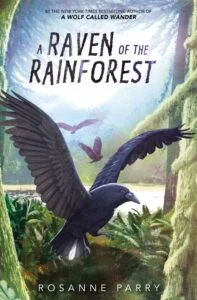
By Rosanne Parry
This stand-alone novel joins Parry's Voice of the Wilderness series, which includes A Wolf Called Wander, A Whale of the Wild, A Horse Named Sky and A Wolf Called Fire. Westerly, a raven who doesn't fit in with her family, is told by the roost's story keeper that she alone is destined to save her kind. Doubting that destiny, she leaves, vowing never to return. A once-in-a-lifetime volcanic eruption changes her course and sends her back toward home.
By Mark Brake and Benjamin Bryant
Brake and Bryant argue that earlier societies were far more sophisticated than the usual stereotypes suggest. The book covers Mesopotamia, the Stone Age, ancient Greece and Rome, medieval pirates, Viking seafarers, samurai, Chinese dynasties and cowboy cultures across the Americas and Mongolia. Its examples include terraced farming in the Andes and China, Roman concrete, Stonehenge and Viking battlefield herbalism. The structure organizes these inventions around the elements, with medicine drawn from Earth, navigation from Air, warfare from Fire and environmental manipulation from Water. For readers interested in how people have long adapted to their surroundings, it's a useful read.


Taken together, the list suggests a shift in how environmental writing is being done. The kelp and river books describe threatened systems, the field biology anthologies show who gathers the evidence, and the industry titles examine why that evidence is so often contested. If you're picking just a few, pair Helvarg's kelp book with Mark's argument about shifting baselines. Together they show what's being lost and why people are so slow to notice.