Iowa’s Agriculture and Bioscience Network Connects Research With Farms and Food Production
Climate Science Sponsored Post 557 reads
Iowa pairs major agricultural production with research facilities, industry access and startup support, giving new farm and bio-based technologies routes toward commercial use.
Iowa’s advantage in agricultural innovation comes from putting research, production and potential customers close together. Vylor’s move to Johnston last month illustrates that connection: the company’s seed genetics portfolio includes Pioneer, a brand with more than a century of operations in the city. For new technologies, that proximity can make it easier to test ideas with producers and refine them for practical use.
The state also has a large agricultural base to build on. Iowa leads the United States in corn, pork and egg production, and ranks among the top 10 states for soybeans, beef, turkey, milk and wind energy. Its farm output supports a wider network of food manufacturing, processing, bioscience and equipment businesses. Twenty-nine of the 100 largest food manufacturers and processors operate in Iowa, alongside five global animal health brands and companies in advanced manufacturing.
That combination matters because innovation rarely moves from a lab to a working farm in one step. Researchers need to understand the conditions in which a product will be used; producers need a chance to assess whether it fits their operations; and companies need a way to develop, produce and sell it. Iowa’s institutions and businesses offer links across those stages.
Field access shapes product development
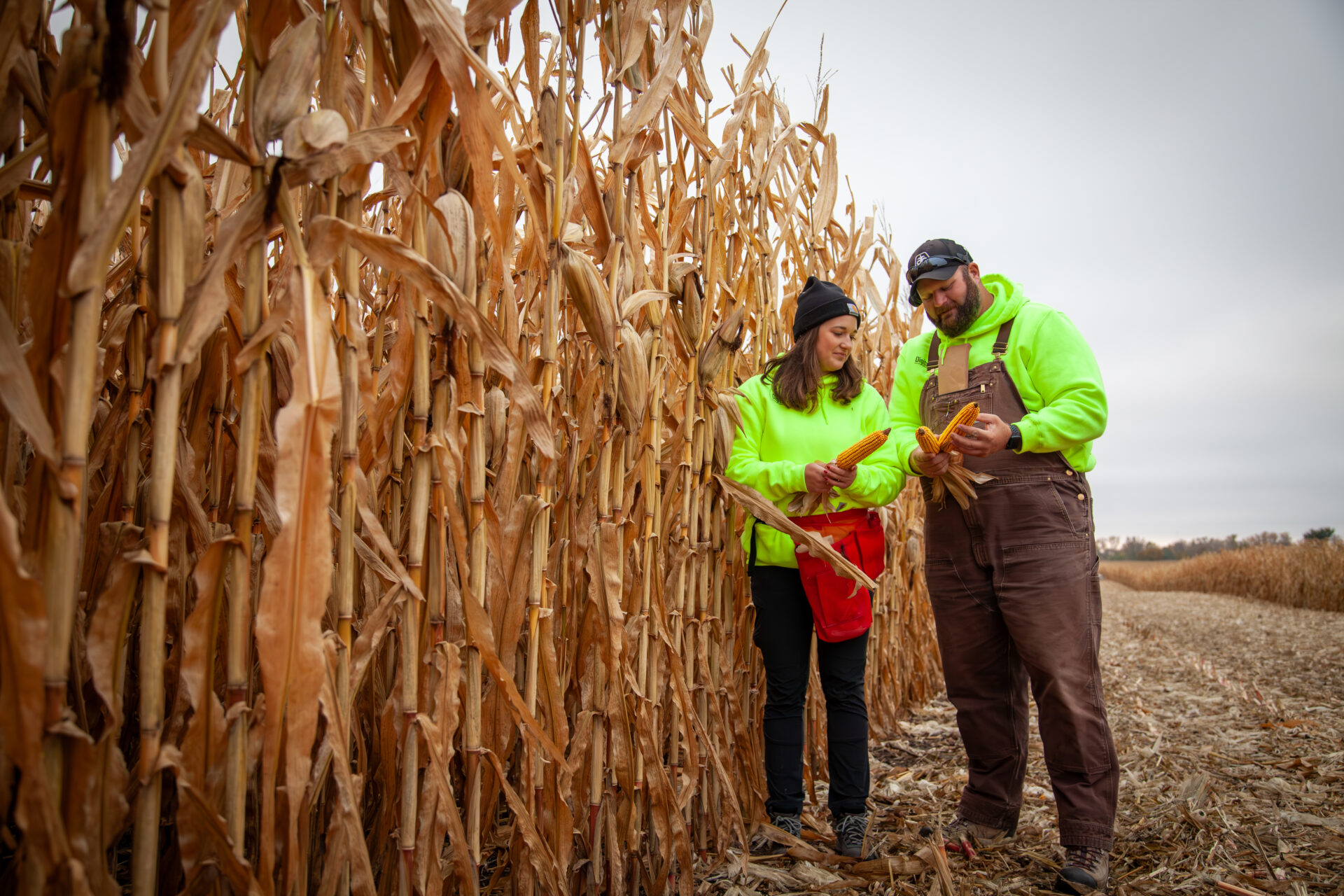
Located in the center of major US agricultural production, Iowa gives technology developers access to farms, livestock operations and industry partners. Todd Frazier, chair of the America’s Cultivation Corridor board and Vylor’s vice president of US marketing, says producers can be within a short drive for innovators across the state. Working directly with them can help established companies and startups test technologies, collect feedback and improve products.
For tools intended for agriculture, that feedback can show whether a product works under the practical conditions farmers face. It can also help developers identify where a technology needs adjustment before they attempt broader deployment. Easy access to producers does not guarantee a successful product, but it creates more opportunities to identify problems early and learn from use in the field.
Research connects discovery to application
Iowa State University is a central part of the state’s research network. Its land-grant mission links scientific work with practical knowledge and education. The university’s undergraduate agricultural engineering program ranks first nationally, and its entrepreneurship program ranks ninth among 300 public and private universities, according to rankings cited by The Princeton Review.
University president David Cook has described agriculture as a broad source of employment: nearly one in five Iowa jobs is connected to the sector, including work in manufacturing, food processing and biosciences as well as farming. That spread gives research institutions a wide range of potential partners and applications. It also means changes in agricultural technology can affect businesses and workers well beyond the farm gate.
Several facilities support research across different stages and fields. Iowa State’s BioCentury Research Farm provides an integrated setting for work on biofuels and biobased products. The Digital Ag Innovation Lab connects research with applications for farmers, agricultural businesses and technology companies.
The university’s Plant Sciences Institute and Center for Crops Utilization Research contribute expertise in plant science and crop uses. Its Center for Bioplastics and Biocomposites works in materials made from biological sources, while the Iowa Pork Industry Center focuses on the state’s pork sector. The University of Iowa adds expertise in biotechnology and biomanufacturing through its Center for Biocatalysis and Bioprocessing.
Collaborative projects are adding capacity. RuralSTAMINA, supported by a $15 million National Science Foundation investment announced this summer, brings together more than 70 partners in Iowa and Nebraska to support rural communities and innovation. A planned BioMADE biomanufacturing facility at Iowa State’s BioCentury Research Farm is intended to support the development and scaling of biomanufacturing technologies. Moving from a research result to a product that can be made at a larger scale often takes specialized facilities, technical work and collaboration with prospective users.
Business support can help ideas grow
Research access and field testing are only part of a startup’s needs. Early companies may also need mentors, funding, workspace and help preparing a technology for customers. Iowa has several organizations aimed at those stages. Ag Startup Engine offers early-stage investment and mentorship from experienced entrepreneurs. BioConnect Iowa connects bioscience and deep-tech startups with funding support and commercialization assistance.
The Iowa State University Research Park provides more than 550 acres of development space and over 1 million square feet of workspace across 16 buildings. Such facilities can give new ventures room to establish operations and give existing Iowa companies space to expand.
A report covering 2021 through 2025 identified Iowa as the Midwest’s leading state for agtech investment, with more than 70 deals totaling more than $245 million. Those figures point to activity during that period, while the longer-term prospects for individual companies and technologies remain uncertain. The practical test is whether connections among researchers, producers, businesses and investors help promising products meet real needs and reach customers.
Debi Durham and Frazier have emphasized the role of collaboration among producers, researchers, companies and entrepreneurs. For founders working on agricultural technology, food products or bio-based materials, Iowa offers a network in which ideas can be tested, adjusted and developed toward commercial use. Its continuing advantage will depend on how well that network turns research capacity and farm access into solutions that work at scale.