Decatur facility targets the lab-to-plant gap in biomanufacturing
Climate Science Elaine Watson 950 reads
Primient's iPROOF site in Decatur, Illinois, offers 1,200 to 10,000 liter fermentation and downstream processing so startups can test scale-up economics.

A lot of promising bio-based products stall right after the lab. The organism makes the molecule, but nobody has shown it can be made at volume without wrecking the margin. Primient, the corn wet milling and biomanufacturing company, is trying to close that gap with iPROOF, a precision fermentation scale-up facility on its Decatur, Illinois campus that it expects to open next May.
What iPROOF actually is
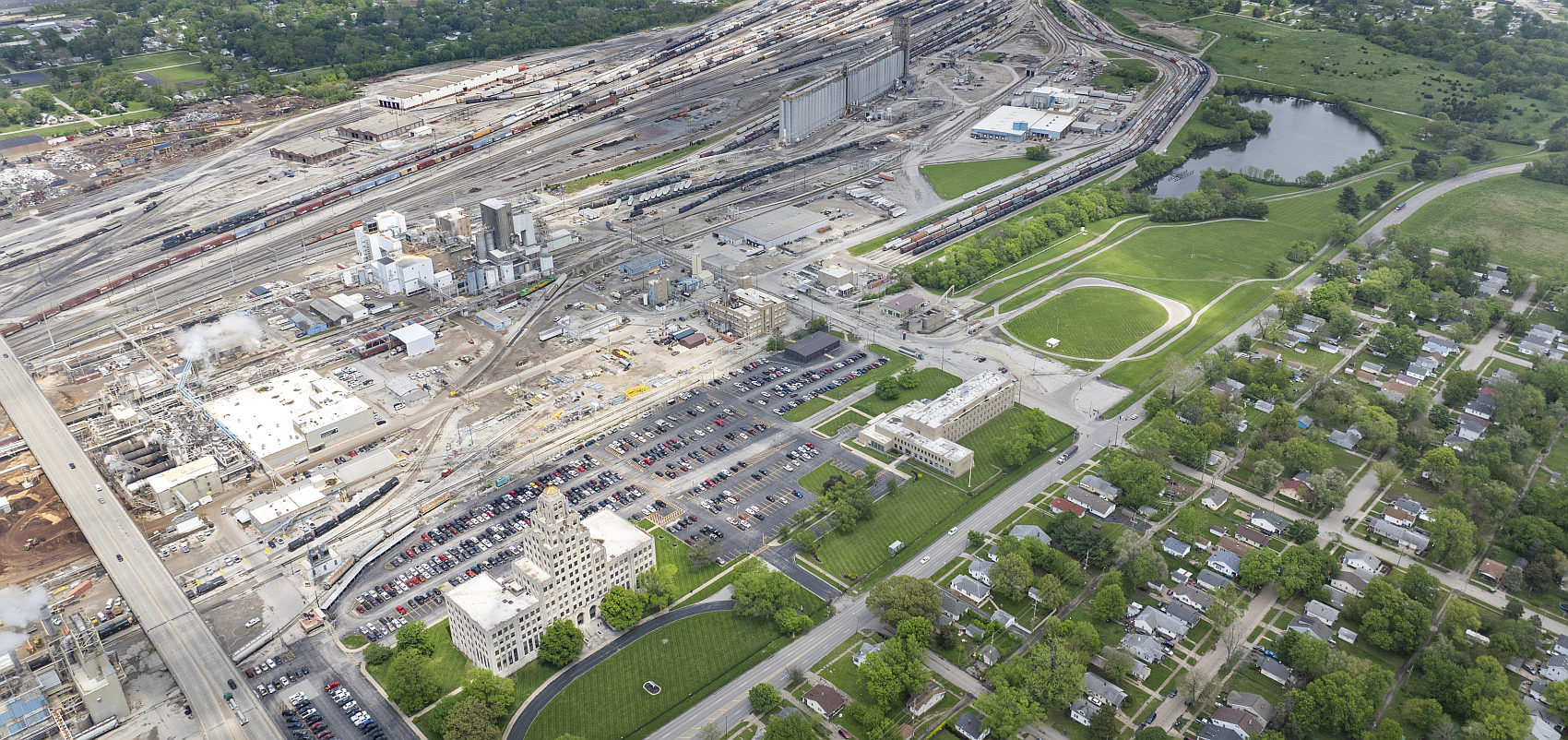
The facility, whose name stands for Illinois Pilot Research and Operations Optimization Facility, will house fermenters ranging from 1,200 to 10,000 liters. Those vessels will sit alongside flexible downstream processing equipment, and dedicated staff will run the operation around the clock. That matters because continuous operation is what lets a team generate enough data in a reasonable timeframe to see how a process behaves over real production cycles.
iPROOF is wholly owned by Primient, but it will run as a separate legal entity with its own management and staff. Tim Fowler, general manager of Primient's biosolutions business, says the intent is an "independent, neutral resource that's open to innovators, startups, research organizations, and established companies." That separation is worth noticing. A facility that serves competitors and customers alike needs to be credible as a place where a rival's process data won't leak back to the parent company's own product lines.
Fowler describes the model as "CDMO plus." It will work on a fee-for-service basis, though Primient is also open to longer-term strategic partnerships. His shorthand for the arrangement: "Startups using iPROOF can basically pay rent, but they don't have to buy a house. And they don't necessarily have to become customers of Primient."
Why the valley of death is hard to cross
Fowler's argument is that the US has no shortage of scientific talent in biotech. The bottleneck, in his view, is commercialization. "The US does not have a problem with the scientific side of the innovation," he said. "Where we have the bigger problem right now, in my view, is on commercialization."
He breaks the industry's so-called valley of death into three overlapping problems. The first is technical: issues that never show up in a small flask can surface as bioreactors get bigger. Mixing, oxygen transfer and heat removal all behave differently at volume, so a strain that performed well at bench scale may underperform in a larger vessel. The second is economic: companies need to validate production costs at a meaningful scale to know whether their business model holds. The third is financial: Fowler says investors are increasingly reluctant to fund the infrastructure needed to answer those first two questions.
His summary of the stakes is blunt. "You might be able to get through one of those two problems, but when all three exist in the same space… you have a big problem." Any one of these hurdles is manageable for a well-funded team. Stacked together, they can end a project that the underlying science would have supported.
At the 10,000-liter scale, Fowler says firms working at iPROOF can generate more reliable process and cost data. The same runs can also produce enough material for customer sampling, which is often the step that turns an internal promise into a conversation with a buyer.
Downstream processing gets equal billing
Fowler points to downstream processing as one of the facility's main differentiators, backed by Primient's decades of industrial manufacturing experience. Here's the thing: many startups spend most of their time upstream, on strain development and yield optimization. Part of the reason is practical. It's hard to produce enough material at lab scale to properly test recovery and purification.
The result is that teams can discover late in development that downstream operations present serious technical or economic problems. Recovering and purifying a product from a dilute broth can consume a large share of the total production cost, so a high titer upstream can still produce an expensive product. Fowler's point is that the two halves of the process need to be tuned together.
To make that practical, iPROOF has been designed with interchangeable downstream equipment. Customers can test different separation and purification approaches without committing to one early. "You can almost plug and play," Fowler said. "So I can wheel one unit out, wheel the other one in, plug it in and try a different approach."
The stated goal is to optimize upstream and downstream concurrently, rather than maximizing yield only to learn that the product is prohibitively expensive to recover. "We can help them create a scalable downstream process because we've got decades of industrial scale manufacturing experience," he said.
Primient's industrial base
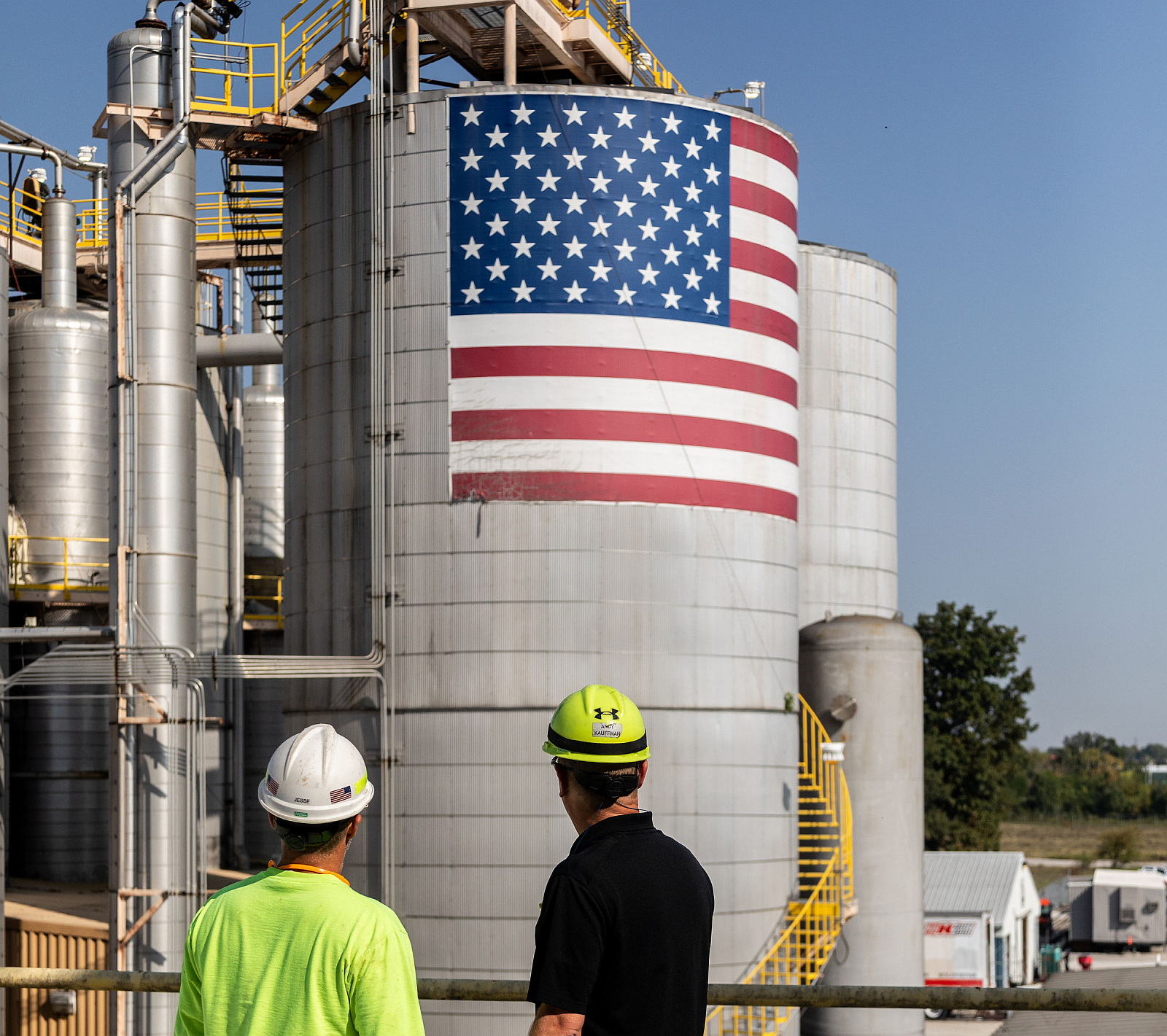
Primient was formed in 2022, after Tate & Lyle sold a controlling stake in its Primary Products business to KPS Capital Partners. It draws on more than a century of corn wet milling expertise and produces sweeteners, starches, acidulants and other corn-derived ingredients. That heritage is the reason Fowler frames the company as a manufacturer first, with fermentation as an extension of a large existing operation.
Primient already runs a biomanufacturing business producing citric acid and bio-based propanediol, and it has set up a dedicated biosolutions division to pursue new opportunities. That division is the group behind iPROOF.
The Decatur campus also houses an existing fermentation facility, known as Building 99. Fowler says it could potentially return to operation with additional investment. He calls it a possible "fast start opportunity" for a company that wants to scale quickly. "There's a fermentation facility ready to go… It's got walls. It's got power, equipment." Restarting an idle plant is usually faster and cheaper than building a new one, though the cost of retrofitting equipment and meeting current operating requirements still has to be worked out case by case.
Primient also has land, utilities and access to corn-derived feedstocks at its industrial sites in Lafayette, Indiana, and Loudon, Tennessee. Fowler says those sites could let companies build or co-locate their own facilities.
Where the commercial bets are
iPROOF is open to a wide range of bioproducts, but Primient has specific interests. Fowler named higher-value renewable chemicals, biopolymers, surfactants and specialty chemicals. He also pointed to molecules such as polyunsaturated fatty acids and terpenes used in flavors and fragrances. On the food side, he sees opportunities in dairy proteins and ag biologicals.
Primient evaluates opportunities through three lenses, Fowler said: market size, margin potential and growth; technical and commercial maturity; and fit with the company's existing assets and expertise. That third lens is what gives the CDMO-plus idea its shape. "If I'm a biotech innovator, I also want to make sure that my partner has commercial expertise," Fowler said. He argues that a supplier which has sold bioproducts for years can add value beyond the manufacturing step, even if it never sells the customer's product itself. A pure contract manufacturer may understand the plant but not the market, and that gap can matter when a startup is choosing where to validate its work.
What to watch next
Several questions remain open. iPROOF doesn't exist yet, and its value will depend on utilization, pricing and how quickly customers can move from pilot data to a commercial build. Fowler says Primient "could also support the next stage" of a company's journey, which he framed as a possible step beyond 10,000 liters. That's a stated intent, not a committed path, and it's worth treating as a hypothesis until projects actually make the jump.
The trade-off is familiar to anyone who has followed scale-up in fermentation. Shared facilities lower the entry cost and spread risk, but they also mean a startup's process runs on someone else's equipment, under someone else's schedule. Interchangeable downstream units and a separate legal entity are attempts to reduce that friction. Whether they're enough will show up in the first few projects through the door.
For the wider transition, the test is simple. Bio-based chemicals and ingredients only displace petrochemical or conventional supply if they can be made at scale and at a cost that buyers accept. iPROOF targets exactly that middle step, where many good ideas have historically run out of money or data. If it fills, expect more of these shared pilot-to-commercial facilities to follow. If it doesn't, the valley is still there.