Reservoir Farms Brings Physical AI Testing to Washington's Yakima Valley
Climate Science Elaine Watson 792 reads
Reservoir Farms opens a Yakima Valley site in spring 2027 to test rugged physical AI on tree fruit and blueberries, with more than 30 startup members.
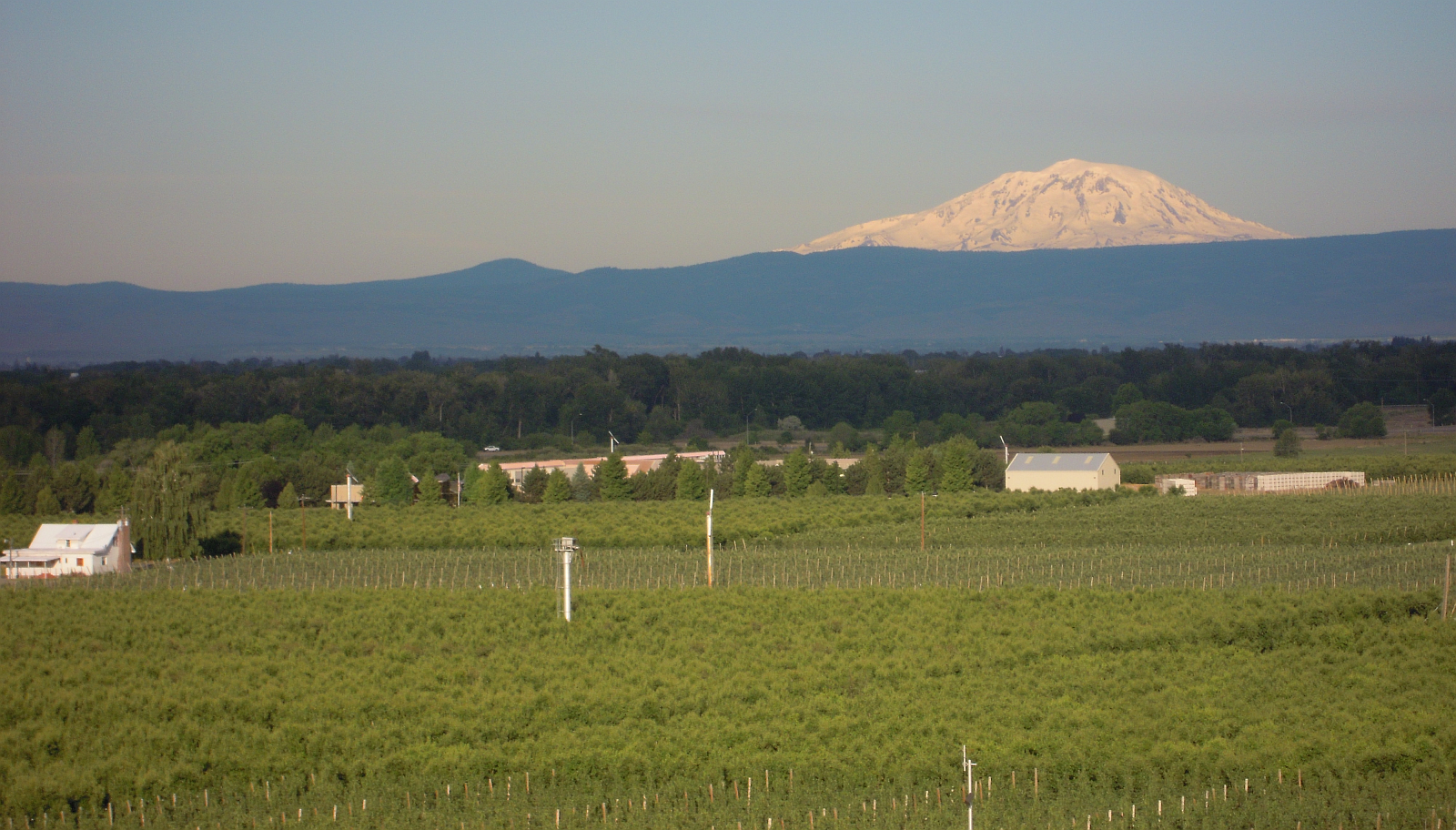
Reservoir is taking its on-farm model north. The ag robotics specialist is opening Reservoir Farms Washington in the Yakima Valley in spring 2027, and the site marks the first expansion beyond California and Arizona. It also signals a shift in focus, from row-crop-friendly testing toward tree fruit and blueberries, where the hardest mechanical problems live.
Why the Yakima Valley, and why now
The new site follows the launch of Reservoir's farms in Salinas and Sonoma, California, and Yuma, Arizona. Its Washington partners include the Washington Tree Fruit Research Commission, the North American Blueberry Council and the Tri-City Development Council, which is providing financial support. Reservoir is also exploring a tie-up with Washington State University's Prosser Irrigated Agriculture Research and Extension Center.
Money is following the model. John Deere has pledged $10 million over three years, and Western Growers has announced a three-year, $1.5 million commitment earlier this year. Reservoir's membership has now topped 30 startups.
Four companies will join the Washington site as founding members: Bonsai Robotics, which makes AI-powered ag robots; Sky Sense, which uses drones for bird mitigation; Cordon, focused on precision spraying; and Rootline Robotics, which weeds by electrocution.
Building machines with growers in the loop
Reservoir Farms Washington will copy the approach used at its other sites. Startups work on real farms alongside researchers and growers to build, test and refine their technology. The initial focus is apples, pears, cherries and cultivated blueberries, with trials in wine grapes and hops and plans to move into row crops over time.
The crop choice makes sense. Reservoir describes blueberries as combining "nearly every challenge Reservoir startups work on": a labor-intensive harvest that's hard to mechanize without damaging fruit, plus constant disease and pest pressure. Labor is also the biggest pressure point for Washington apple growers, accounting for 50% to 57% of orchard variable costs.
Ines Hanrahan, executive director of the Washington Tree Fruit Research Commission, put the local logic plainly. "Our growers are spending more on inputs every season, and they will not adopt technology that was not developed or tested locally," she said. "A machine that hasn't been through a Washington growing season isn't ready for one."
Less full stack, more novel components
Founder Danny Bernstein sees the funding climate shifting. High-profile setbacks in the sector have made some investors cautious, but he argues that perception, edge computing, AI and robotics, combined with a growing set of off-the-shelf hardware and software, let startups build more flexible machines faster. He says machines are now being "assembled, prototyped and tested in less than six months" on tight budgets.
That's changing Reservoir's own thinking. "There are very few companies who are really building the entire stack now," Bernstein said. Reservoir is becoming "less interested in full stack," he added, because a systems integrator is better placed to assemble complete machines. Reservoir wants to back extremely novel components.
Bernstein sees a clear path for Rootline's electrical weeding. Other companies already have robots working in fields, and they could add electrocution to their machines. He pointed to Saga Robotics, which has sold 250 UV-C robots, and suggested a combined system: UV light from Saga and electrocution from Rootline. He said Reservoir expects to talk about this kind of pairing more often. Rootline is prototyping in Sonoma County, and Reservoir recently invested in its pre-seed round. Bernstein also sees uses beyond farms, including land management, turf and golf courses.
Manipulation is the next frontier he's tracking. Asked about Israeli startup Picker AgRobotics and its flexible, Dr. Octopus-style harvesting arms, he called it "a novel approach" and said he expects a wave of innovation in manipulation over the next five to nine years. He added that foundation model companies, Nvidia and Google all appear to share that view.
Revenue, pricing and a broader investment thesis
Reservoir soft-launched in Salinas in 2025, and Bernstein says it's already profitable this year. He expects annual recurring revenue above $5 million in 2026, with possibly more from a few large opportunities in the pipeline.
Membership is tiered. Startups can access farms for testing with insured machines at no cost through a free associate tier. The top package, at $6,000 a month, gives members a 24/7 office, farm access, storage for large equipment and use of the precision shop. "We're continuing to learn and evolve our model," Bernstein said.
Reservoir's venture arm now frames its thesis more broadly. "We think about it not just as ag or agtech, but as rugged AI," Bernstein said. That covers agricultural robotics plus the wider rugged physical AI stack, including safety autonomy, navigation systems and componentry. He argues that a broader stack opens up more potential acquirers across Silicon Valley, which makes the space more attractive to backers.
What to watch
The Washington site will show whether an on-farm testing model can hold up in a region with different crops, labor pressures and growing seasons than California's. The first real test is whether members like Rootline and Bonsai produce machines growers will actually trial. Hanrahan's line about Washington seasons is a useful benchmark: a robot that survives a Yakima harvest has earned its place. Watch for the pairing ideas Bernstein described, too. If a UV-plus-electrical weeding combination or a manipulation breakthrough moves from prototype to field, the cost and labor math for specialty crops could shift quickly.