DartSolar's Modular Roof Panels Set for Preorder Deliveries in 2026
Climate Science Martin McConnell 789 reads
DartSolar's modular panels mount on standard roof racks and truck beds for 1 to 2.5 kW, with preorder shipments due by December 2026.
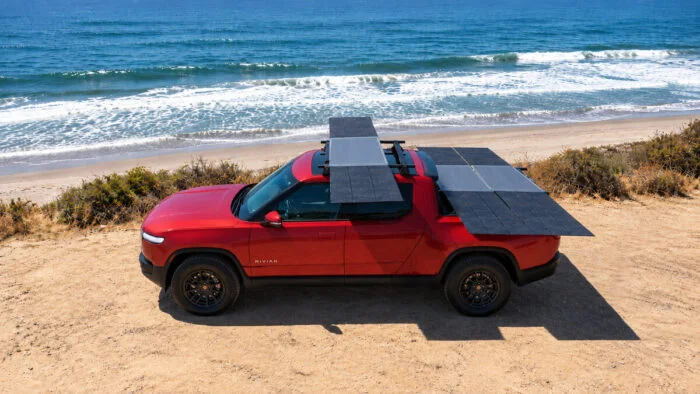
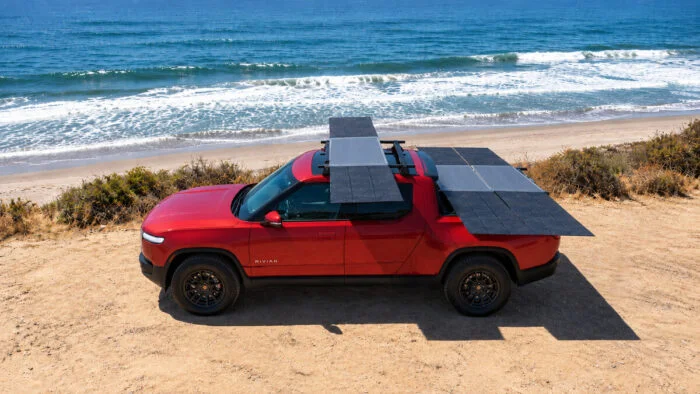
DartSolar expects to start shipping its flagship product to preorder customers by December 2026, which puts portable vehicle-mounted solar on the calendar well before the decade's end. The California company is pitching the system as a way to add generation to cars, trucks and RVs without permanent changes to the vehicle. Whether that pitch holds up will depend on how the hardware performs outside a test environment, but the design choices are worth a close look.
How the modules scale
The core idea is simple: each DartSolar module is a small solar array that clips onto a vehicle's existing crossbars or truck-bed mounts. Two panels on an average sedan's roof rack add up to roughly 1 kW. Three or four panels on a pickup push output to around 2 kW. RV owners can run five panels for 2.5 kW.
That modularity matters more than the headline numbers. A buyer can start with a small kit and add panels as needs grow, rather than committing to a fixed array sized for one vehicle. It also means the same product line can serve a commuter car, a work truck and a camper, which is a meaningful advantage for a niche hardware company trying to build volume.
Keep in mind that a rated 1 kW is a peak figure under ideal sunlight. Real-world output on a moving vehicle will be lower, varying with sun angle, shade, temperature and how much of the panel surface the sun actually reaches. Anyone planning around these modules should treat the rating as a ceiling and estimate daily energy with more conservative inputs.
Installation and removal
DartSolar says the modules install onto standard crossbars without drilling, and that owners can take them off in minutes. For people who lease vehicles or don't want to alter a roof, that's the practical hook. Nothing gets permanently attached, and the kit can come off before a car goes into a garage or a shop.
The packaging is part of the appeal too. When collapsed, each module measures about 23 inches by six feet. When deployed, it extends up to 15 feet to capture more sunlight. A footprint that shrinks for transport and opens for generation is a sensible answer to the storage problem that has limited rooftop-style portable solar.
Testing and the speed question
During development, DartSolar ran vehicles at speeds up to 100 miles per hour in the desert to check how the racking held up, testing both standard and side-to-side configurations. The company still recommends that owners keep their speed below 70 miles per hour while a DartSolar is mounted. That gap between tested and recommended speeds is a useful signal: the margin is there, but the company is not asking customers to rely on it.
The same caution applies to wind loading, vibration over long highway stints and how the mounts behave after years of thermal cycling. Those are the questions that tend to separate a prototype from a product, and a preorder window gives the company time to collect field data before full-scale shipments begin.
The panels use a 4 mm polycarbonate shell, which DartSolar says can handle hail, gravel and other road debris. Polycarbonate is a common choice for impact resistance, and the thickness suggests the designers prioritized toughness over weight. Buyers should still look for independent durability data as it becomes available, since manufacturer claims about impact resistance are only as good as the testing behind them.
Open parts and 3D printing
The company is also taking an unusual approach to spare parts. DartSolar has placed all of its plastic components, including bearing blocks, handlebars and end caps, under a share-alike license that allows 3D printing. It plans to host user-published designs, which would let owners and third parties create replacements or variations.
Founder Omid Sadeghpour framed the logic directly: "A product with a ten-year outdoor target should outlive the company's spare-parts bin. If you can print the part, you never wait on us."
That approach has clear upsides. Plastic wear parts are often the first thing to fail on outdoor gear, and waiting weeks for a replacement can leave a product sitting idle. Open designs can also shorten the path to fixes and extend the useful life of a unit. The trade-off is quality control. Printed parts vary with material, printer and settings, so DartSolar will need to decide how much it validates community designs and how it handles warranty claims when a user-printed component is involved.
Where it fits and where it doesn't
DartSolar positions the product as a way to make power where there's no outlet: a campsite, a jobsite or a home during a power outage. The company is candid about the limits. Its panels can charge an EV only about 10 to 20 miles per day, which makes them a supplement rather than a primary charging source for most electric cars. Where they do shine is in topping up a house battery or portable power station, keeping lights, phones, tools and small appliances running away from the grid.
That framing is realistic, and it points to the more useful way to think about vehicle-mounted solar. A kilowatt-scale array on a roof rack won't replace a home system or a fast charger. What it can do is offset fuel for a generator, extend time off-grid or add a modest buffer during a service interruption, which is valuable for remote work, small businesses and households in areas with unreliable power.
The open questions are the ones any new mobile energy product faces: long-term durability in harsh climates, real-world output against rated capacity, and whether preorder timelines hold. Customers should watch for field reports and independent tests before the first deliveries arrive. If DartSolar hits its December 2026 target and the modules perform close to their specifications, the product could carve out a practical place between portable panels and built-in vehicle solar. Orders are open now on the company's website at dartsolar.com.