Optivolt Raises $32 Million to Scale Solar Panel Power Electronics
Climate Science Martin McConnell 560 reads
Optivolt’s $32 million Series A will scale panel-integrated electronics designed to recover solar output lost to shade, weather and cell degradation.
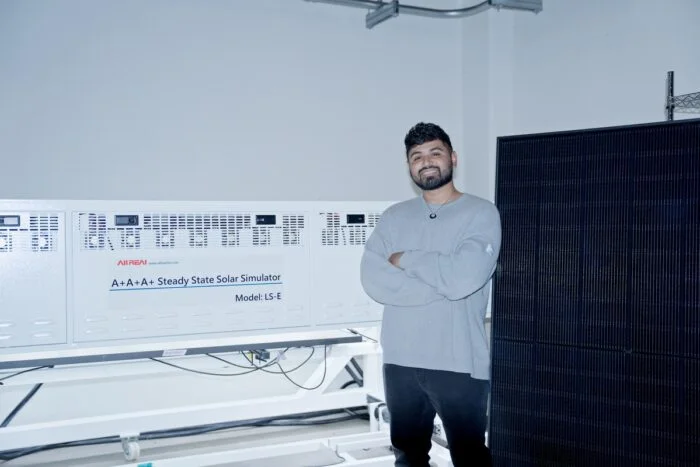
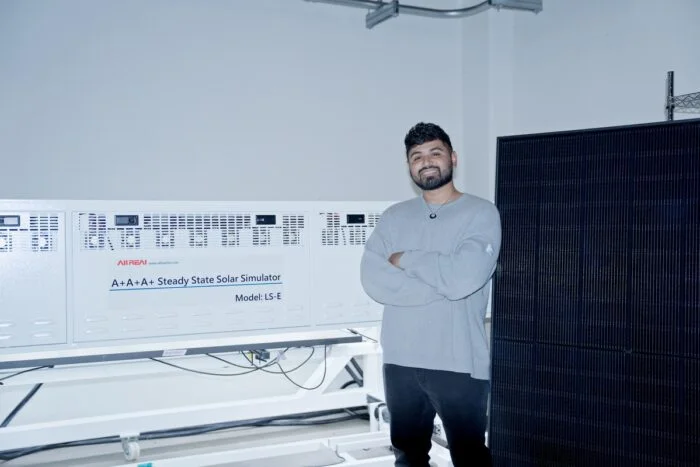
Optivolt has raised $32 million in Series A funding to scale its Power Balancer, electronics embedded within solar panels that manage energy output across groups of cells. The California company says more than 20,000 panels with the technology have shipped. The new financing brings its total capital raised to $42 million and is intended to support production at greater scale.
The proposition is straightforward: a panel should be able to respond when its cells face different operating conditions. Shade, changing weather, dirt and gradual degradation can reduce the energy a solar installation produces. Optivolt’s system aims to limit the effect of those localized problems by managing power within the panel, instead of allowing weaker-performing cells to constrain a larger group.
That design shifts some power management directly into the module. Conventional panels are largely passive: they convert sunlight into electricity, while other equipment in a system handles additional control. Optivolt’s approach makes the panel itself more responsive to uneven conditions. If the company’s performance claims hold up in wider use, the value would come from recovering output that existing installations might otherwise lose, rather than from changing the basic photovoltaic process.
Power management inside the panel
Optivolt was founded by CEO Rohit Kalyanpur, who says he spent nine years rebuilding the solar panel around embedded power electronics. “Solar became cheap enough to compete. I founded Optivolt to make it intelligent enough to power the world,” Kalyanpur says. He describes the goal as a panel that can adapt to shade, weather, dirt and degradation in real time.
Embedding electronics in a module also brings engineering demands. Components operating in direct sun must handle heat while remaining part of equipment expected to work outdoors for many years. Optivolt says its Power Balancer achieves 99.4% conversion efficiency under “typical conditions.” That figure describes conversion performance, while the amount of extra energy a system can produce will depend on its conditions and on the losses the equipment can prevent.
The company says it drew on construction techniques used in aerospace applications and tested its electronics for long-term use inside a panel. The design has to balance its potential to recover energy against the added complexity of putting active components into equipment traditionally built to be passive. Reliability over time and performance across a range of real installations will matter alongside the efficiency figure.
What the performance claims show
In its internal tests, Optivolt says panels using the Power Balancer produced up to six times as much power as panels fitted with bolted-on power optimizers in defined shade scenarios. That comparison is specific to the test conditions described by the company. It doesn’t establish that every installation will see the same gain: the benefit depends on how much shade or other uneven performance affects the panels, and on the equipment used for comparison.
The distinction matters for customers assessing the technology. A panel-level system could be most useful where rows of cells or panels encounter different conditions, since a localized problem can otherwise reduce output beyond the affected spot. In installations with consistent sunlight and little shading, there may be less lost energy for an adaptive system to recover. Project designers will need evidence matched to the site and its expected operating conditions.
Optivolt’s $32 million round comes from VXI Capital. The company presents the funding as support for scaling products already shipped, rather than as financing for research alone. The transition from a working design to manufacturing at larger volumes can test whether a technically complex module can be produced consistently while meeting the performance and durability expectations of solar buyers.
A shift in the solar module’s role
Falling module costs have made the panel itself a more familiar, widely available product. Optivolt’s argument is that the next improvement can come from adding control inside that product, so it responds better to conditions outside an ideal laboratory setting. That approach fits a broader technical push to improve the energy delivered by each installed system, alongside efforts to add generating capacity and storage.
Orin Hoffman, managing director at VXI Capital, says the energy sector needs more than additional passive panels and describes Optivolt’s work as a platform for the next generation of solar. Enphase CEO Paul Nahi, now an Optivolt investor, points to rising panel power, wider storage adoption and pressure to reduce costs as reasons to reconsider where power electronics sit. Those views frame the opportunity; the commercial case will depend on measured output, field durability and the cost of integrating the technology at scale.
For households and businesses, the practical question is whether the extra energy recovered over a system’s life justifies the panel design and its equipment. For installers and system designers, the question is how the technology performs across different site conditions and how it fits with the rest of a solar installation. More shipped panels will give Optivolt a chance to demonstrate how its controlled test results translate into everyday operation. The next measure to watch is sustained performance as production expands.